
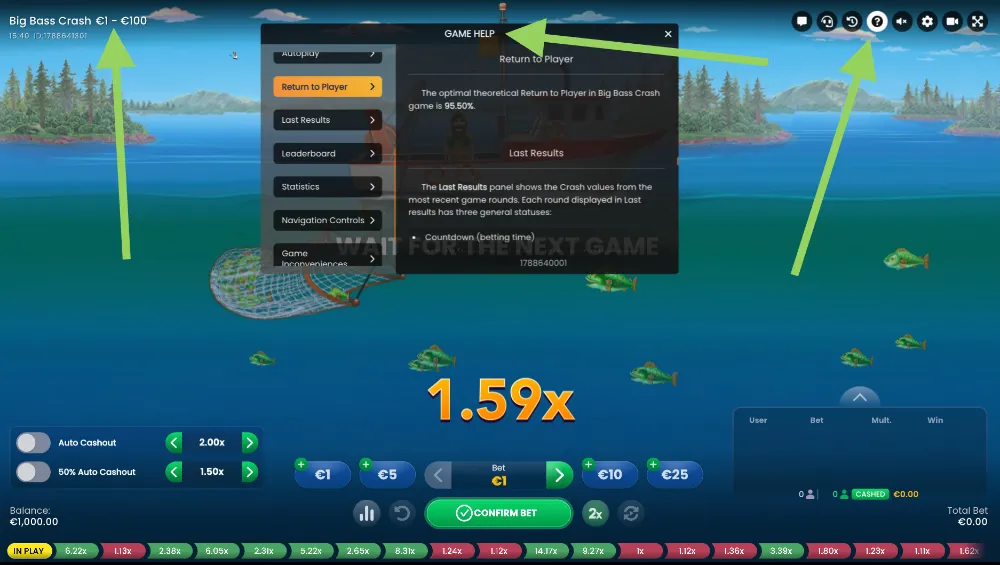
Fast reactions matter in Big Bass Crash, but observe a top UK player and you’ll see something else. The key distinction is in their mind. The game’s emotional appeal is as powerful as its flashing multipliers. The secret isn’t just anticipating when the multiplier will crash. It’s controlling your own responses to the extreme fluctuations. This article explores the cognitive strategies and systems these professionals use. They cultivate discipline, manage risk, and take clear choices when the pressure is on. We’re going beyond the basic button presses to the fundamental mentality that converts lucky hits into reliable, strategic play.
After-Session Analysis and Review
For these players, the mental work isn’t over when they exit the game. A organized post-session review is where long-term progress is made. They spend a few minutes to measure their performance against their process goals, not their profit or loss. They raise simple questions. Did I adhere to my cash-out points? Did I obey my bankroll rules? Did I notice my tilt and deal with it? They might write a line or two in a notebook. The point is to differentiate the quality of their decisions from the randomness of the result. A losing session where they adhered to every rule goes down as a win for discipline. A profitable session where they ignored their own strategy gets marked as a loss. This habit bolsters the right mental model. It conditions their self-assessment to focus on controllable actions, building a mindset geared toward refining their process, over and over.
Mental Sharpness Techniques
Big Bass Crash is fast and repetitive. Attention can wander, and that’s when mistakes take place. Pros use specific methods to keep their focus sharp. A well-known one is divided play. They’ll play a fixed number of rounds, say fifty, or stick to a strict twenty-minute block. Then they take a required break, no exceptions. This combats “autopilot mode,” where reactions diminish and discipline crumbles. While playing, they practice selective attention. They focus on the game’s visual climb and rising soundtrack, and deliberately tune out distractions like chat boxes or phone pings. Some even use a quiet voice in their head, describing their actions. “Bet placed. Cash-out set at 7x.” This verbal cue strengthens intentionality. This state of intense focus lets them identify their own bad habits in real time, like the urge to let a bet ride too long during a good run, so they can correct it immediately.
Managing Tilt and Emotional Spikes
No one is safe from tilt—that surge of frustration that impairs judgement. The professional advantage isn’t in escaping it, but in having a drill for it. Step one is recognition. They’re tuned in to their own physical tells: a quicker pulse, a tight jaw, the urge to place a hasty bet. The moment they notice it, the response is instant and non-negotiable: a full stop. They rise from the screen. They execute a pre-planned cool-down, maybe a walk around the room, drinking a glass of water, or doing a sudoku puzzle. The key is they don’t bargain. “Just one more round” is not an option. Their mental prep includes embracing tilt. It’s not a defeat; it’s a part of the process. By taking the shame out of the emotional spike, they avoid the secondary frustration of being frustrated. That lets them recover and get back to equilibrium much sooner.
The Mindset of Risk and Uncertainty
Big Bass Crash is a game of controlled exposure to raw risk. The counter goes up, the anticipation grows, and the possible payout calls out enticingly. UK pros don’t see this as a simple bet of the wheel. They see a chain of calculated moves. They handle each round as its own isolated event. The last crash doesn’t affect the next one, a concept called event separation. This thinking destroys the dangerous idea of chasing losses or thinking a crash is “due.” Their planning starts with a harsh, honest truth: the game is unpredictable. Once they accept this, short-term swings have less impact. They begin a round already fine with the thought of losing. This seems counterintuitive, but it gives them space. It allows clear thinking. While amateurs burn mental fuel on stress or thrill, pros direct that energy into their personal risk rules. For them, uncertainty becomes a landscape to read, not an adversary to confront.
Embracing the Unpredictable
A key element of this mindset is establishing a bright line between what you are able and unable to manage. Pros keep two mental lists. One list includes the things they control: their bet size, when they hit cash-out, how long they stay in the session, their emotional state. The other list has just one item: the exact moment the multiplier crashes. They direct their focus entirely on the controllable items. This cuts down on anxiety and the slow drain of decision fatigue. Many train this through deliberate mental drills, imagining the crash as a chance happening, like a flipped coin. The aim is to react with a calm, strategic decision, not a sudden rush. This isn’t about not caring. It’s about developing a shock absorber between the event and your own inner stability. When the crash comes, you seek a tactical response, not an emotional meltdown.
Bankroll Management as a Psychická Kázeň
Lidé diskutují o bankroll management jako by šlo o pouhou matematiku. Pro profesionála, Big Bass Crash Slots Bonus, je to psychologické brnění. It’s where jejich teorie rizika potkává praxi. Hráči z UK které vidíme definují a session bankroll as money na který jsou zcela připraveni se vzdát. Oddělují ho od svých životních nákladů, jak v peněžence tak v hlavě. Opravdová kázeň se ukazuje v tvrdohlavém odhodlání k jednotkovému sázení—where every wager is a tiny, fixed slice of the total—a k přísným stop-loss limitům. Tito profesionálové nevnímají tato pravidla as handcuffs. Chápou je as freedom. Pravidla automate the toughest call of all: umět skončit. During a losing run, mozek křičí to double down and chase the loss. Their preparation zahrnuje předběžný závazek. Rozhodují o limitech když jsou klidní, so when the heat is on, the choice is already made. Toto mění bankroll management from a dry calculation into a live-fire exercise in emotional control.
Building a Pre-Game Ritual
The mental work starts well before the initial bet. UK professionals approach a playing session like a musician handles a gig. They need a routine to find their flow. A regular pre-session ritual functions as that entry point. It shifts the brain from ordinary clutter into a state of sharp intent. For some players, this involves a minute of quiet breathing to calm the nerves and heighten concentration. Others could access a basic text file with their core principles—bankroll caps, loss caps, cash-out points. The ritual’s actual job is to create a break. It creates a buffer between the urge to gamble and the act of gambling. In that break, they lock in their targets. These are virtually always about process, not winnings. A good goal is “I will cash out at 5x every time.” A weak goal is “I must win £50 today.” That psychological anchor becomes a safety net later when the play gets turbulent, a fixed point to return to.
Cultivating Long-Term Stamina
Lasting success in Big Bass Crash is a marathon. The veterans recognize that mental resilience is forged brick by brick, through daily exercise of these tenets. They tie their gaming mindset to their overall lifestyle habits. Good sleep, decent food, and some physical exercise aren’t just healthy; they’re performance support. They also employ deliberate detachment. They have hobbies and friends that have nothing to do with gaming. This preserves their perspective healthy and halts burnout before it begins. This holistic view secures they have the mental stamina for those high-focus sessions. They see each game not as a isolated drama, but as a single point on a long chart of self-mastery. That long view lessens the blow of a sudden crash and moderates the thrill of a big win. This perspective is the last, and most robust, mental buffer. It reshapes the game from a rollercoaster of tense moments into a sustainable practice of disciplined choices.
The strategic edge in Big Bass Crash, as shown by top UK players, is won in the mind. It’s forged through deliberate routines, a stubborn loyalty to personal rules, and a systematic way of processing emotions. By zeroing in on what they can control—the pre-session ritual, the bankroll discipline, the focused play, the honest review—players can traverse the game’s inherent chaos with clarity and grit. This mindset alters the game. It moves play from reactive betting to proactive strategy. The main adversary isn’t the random number generator. It’s your own built-in biases and knee-jerk impulses. Embracing this framework is the most thorough, most effective preparation a player can ever pursue.